Extreme Agile Is Coming - What Happens When AI Makes Your Team 30x More Productive

The End of “Good Enough Agile”
In recent talks and interviews, Jeff Sutherland, co-creator of Scrum, has made a striking prediction:
AI-augmented Agile teams could become 30-100x more productive by 2030.
That statement sounds bold, but it reflects what many teams are already experiencing as AI begins to automate large parts of software delivery.
The version of Agile that's ending is the one that relied on humans being the bottleneck at every stage. For years, many organizations practiced what could be called Agile theater: stand-ups that defaulted to status reporting, estimation rituals that offered the comfort of predictability, and tools like Jira used more as performance dashboards than decision aids.
This model was tolerable when progress depended entirely on human throughput. AI changes that equation. When summarizing work, drafting tickets, or surfacing patterns no longer require significant human effort, the inefficiencies in ceremonial Agile become harder to justify.
Teams are left with a more direct question: are their practices helping them make better decisions, or simply keeping work in motion?
Agile itself will survive. The teams that treat AI as peripheral will find themselves outpaced by those who adapt their processes around it.
What “Extreme Agile” Actually Looks Like
"Extreme Agile" doesn't introduce a new framework. The underlying principles (transparency, inspection, adaptation) remain intact. What changes is how work gets done inside those boundaries.
AI stops being a background tool and becomes part of the operating environment. It runs continuously alongside the team, processing information in real time. As a result, every Agile role shifts away from coordination work and toward judgment.
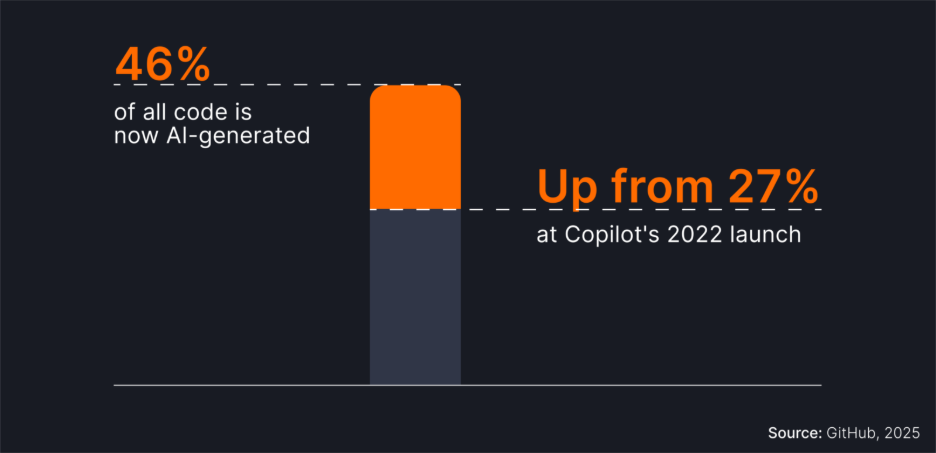
In sprint planning, teams arrive with more of the groundwork already done. Support tickets, user feedback, and usage data are synthesized into draft user stories and acceptance criteria. Historical delivery data is used to model likely capacity and surface risks tied to dependencies or team composition. Human effort moves from writing and estimating to validating whether the proposed work actually serves the product's intent.
Daily standups change shape. Instead of walking through yesterday's activity, teams review pre-compiled signals: blockers inferred from code changes, delayed dependencies, or conflicting priorities. The discussion shifts toward decisions that require context (trade-offs, sequencing, escalation) rather than progress reporting.
Sprint reviews become more critical. When features can be delivered quickly, the cost of validating the wrong outcome increases. Reviews focus less on demonstrating output and more on confirming whether delivered work created value or introduced risk.
In retrospectives, patterns across multiple sprints are surfaced automatically: recurring delays, correlations between practices and outcomes, signals of burnout or inefficiency. Humans interpret what those patterns mean and decide what to change.
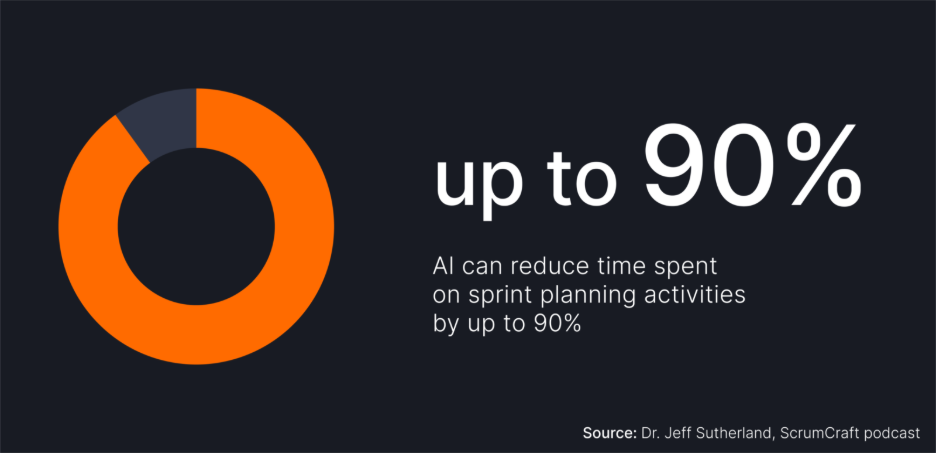
Extreme Agile doesn't remove work. It moves it. Teams spend less time organizing information and more time deciding what to do with it. The teams that benefit most have enough experience to decide when speed helps and when it gets in the way.
The Speed Trap - Why Faster Isn’t Always Better
Speed has always been an incomplete proxy for progress. AI simply makes that limitation harder to ignore.
Teams using AI can deliver more features in less time, but speed alone offers no guarantee of value. The risk of building the wrong things faster has never been higher. When the cost of production drops, the cost of judgment rises.
This shows up in actual performance data. A recent study by METR found that experienced developers using AI tools took 19% longer to complete complex tasks, despite believing they were moving faster. Output increased, but cognitive overhead and hidden rework offset the gains.
The failure mode is subtle: teams don't just build the wrong feature. They build it efficiently, thoroughly, and at scale. A recommendation system shipped in two sprints instead of six may be technically sound, yet still rejected by users as irrelevant or intrusive.
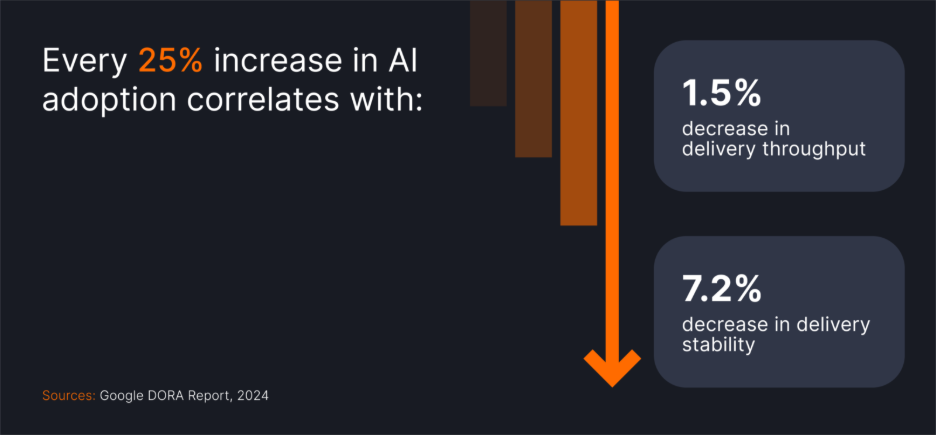
This is where Agile guardrails matter. Sprint reviews, architectural oversight, and product judgment are the mechanisms that prevent speed from becoming waste.
The teams that perform best have enough experience to know when speed helps, and when it needs to be constrained.
When AI Stops Assisting and Starts Participating
Another shift in Agile is emerging alongside faster delivery. AI is no longer limited to helping individuals complete tasks and is beginning to function as a direct participant inside development workflows.
Instead of supporting developers, AI agents are increasingly assigned responsibilities such as drafting architecture proposals, coordinating backlog decomposition, monitoring deployment risks, or validating system dependencies. This changes Agile dynamics in a more structural way than simple productivity acceleration.
One example of this evolution is the Breakthrough Method for Agile AI Development (BMAD), which treats AI agents as specialized contributors operating alongside human roles. Within this model, agents can take ownership of preparatory and analytical work, such as generating test strategies, surfacing architectural risks, or mapping delivery dependencies. In the meantime, humans can focus on validation, prioritization, and strategic trade-offs.
The result is not fewer development steps, but a redistribution of cognitive workload across both human and machine contributors.
As AI agents begin participating directly in delivery cycles, team composition becomes even more critical. Organizations increasingly require engineers who understand how AI behaves inside production workflows rather than just how to use AI tools individually.
This includes solution architects who design systems that safely incorporate AI-driven outputs, DevOps specialists who manage automated deployment feedback loops, AI/ML engineers who ensure reliability and governance, and senior developers who can validate generated solutions against long-term product architecture and business constraints.
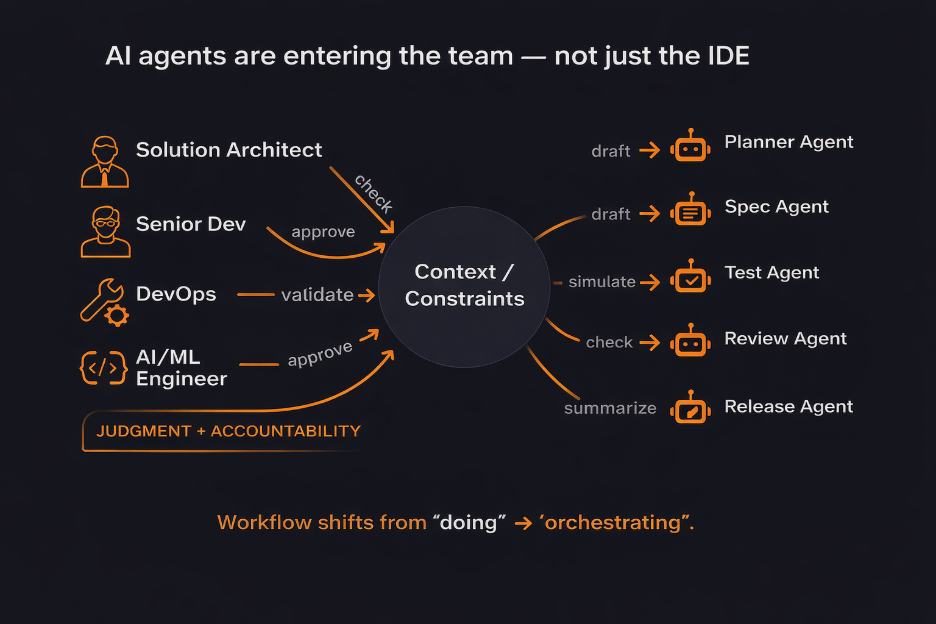
Rather than reducing the importance of human expertise, agent-driven development raises the bar for it. Teams that successfully integrate AI contributors tend to rely on experienced engineers who can supervise, interpret, and correct automated outputs while maintaining system coherence. In AI-augmented Agile environments, the most valuable teams are not those with the most automation, but those with enough senior capability to guide automation toward meaningful outcomes.
Most hiring pipelines weren't built for this. The pool of engineers who can work confidently alongside AI systems is still small. Organizations that move fastest tend to bring in embedded engineering talent that has already operated inside AI-augmented delivery environments and can plug into existing team structures without a long ramp-up.
That capability rarely comes through job boards. It usually comes through long-term partnerships with teams that have already navigated this shift.
New Roles in the AI-Augmented Team
As execution work becomes easier to generate, the value of certain roles changes. They don't disappear. Their center of gravity shifts.
Some activities are already being compressed. Research from the Standish Group and developer productivity analyses shows that routine tasks like summarization, ticket drafting, and basic automation are among the first areas where tooling impacts throughput. But these effects are uneven and highly context-dependent.
What becomes more valuable is the ability to manage context and decision quality.
One emerging role is the Context Architect. These are engineers who maintain the information systems that guide AI-assisted work: architectural decisions, domain constraints, historical trade-offs, and product intent. AI output is only as useful as the context it receives, which makes deep understanding of both the codebase and the business essential.
Another is the AI-Human Integration Specialist. This responsibility sits at the boundary between speed and safety: deciding when generated output can be trusted, when it must be reviewed, and how governance, security, and quality standards are enforced as delivery accelerates.
Product leadership also evolves. Strategic Product Thinkers shift the conversation from "what can we build next" to "what should exist at all." As delivery speeds up, validating relevance, value, and downstream impact becomes central to the role.
Scrum Masters and Agile leads move away from facilitation mechanics and toward cultural stewardship and strategic enablement. They protect feedback loops and ensure that speed does not replace learning.
This is where team structure becomes decisive. In AI-augmented environments, context doesn't just support delivery. It determines whether faster execution produces value or noise. Rotating or short-term contributors lose that context faster than it can be rebuilt.
At Genius Match, we've spent 20+ years building embedded teams designed to avoid that failure mode. With an average engineer tenure of 7 years, our teams operate as part of a product's decision-making fabric, not as a separate execution layer.
Preparing Your Organization for Extreme Agile
Most teams don't need more structure. They need structure that fits how work actually unfolds.
Different types of work call for different operating rhythms. Exploratory efforts like data experimentation or early product discovery move better in continuous flow. Defined engineering work with stable requirements still benefits from sprints. Strong teams learn to run both modes at once. Forcing everything into a single cadence creates friction that slows the whole system down.
Talent strategy matters as much as process here. The starting point is understanding which roles get most affected by acceleration and which carry more responsibility for judgment. You need people who can review generated output, push back on assumptions, and connect delivery decisions to business outcomes.
This also shifts how you should evaluate partnerships. When execution scales quickly, context becomes the bottleneck. Organizations that treat talent as interchangeable capacity lose decision quality over time. The engineers who understand your product, your constraints, and your customers become more valuable as the pace increases.
Partnership plays a different role in this environment. Teams adapting to new delivery dynamics need support in reshaping how work gets structured, reviewed, and sustained. Staffing decisions and methodology start overlapping in practice, not just in theory.
At Genius Match, we work with organizations navigating this shift. We embed senior engineers who operate effectively in AI-augmented Agile environments while preserving continuity and accountability inside the team. Our average engineer tenure of 7 years and 90% team retention rate on long-term accounts like Regent Education reflect this approach. The goal is supporting teams as their ways of working evolve.
Extreme Agile comes down to this: building teams that recognize when speed helps and when it creates risk.
The Advantage of Moving First
As execution accelerates, the advantage shifts to teams that can preserve judgment, context, and learning while moving faster. Organizations that start adapting how they work today will have more room to experiment, adjust, and compound those gains over time.
Staying with practices that no longer reflect how work gets done is a choice. So is deliberately evolving team structure, roles, and partnerships to match reality.
At Genius Match, we work with engineering leaders doing exactly that. We embed senior talent who integrate deeply into teams and bring the context continuity that AI-augmented delivery demands.
The teams that move first will learn fastest.

What HR Media Picked Up When Geni Launched
Geni launched in September. Here is what HR and tech media wrote about it, and the hiring numbers sitting underneath the coverage.

Why fraud and application overload are the same problem - and what it takes to solve both
Recruiters have never had more applicants to choose from. They have never had less certainty about who those applicants are. We look at how volume and fraud became one problem, and what it takes to fix it at the source.

Hiring Is Getting Harder in GovCon, and Here's What It's Costing Contractors
Intro for the blog page A bad hire in GovCon doesn't cost you a salary. It costs you a CPARS rating, and CPARS follows you into the next recompete. Here's how one screening decision reaches an award you haven't bid yet.